




-
Selecione outro idioma
-

-

-

Academic and Social Impact
The program promotes its students’ contact with the productive sector through applied work in courses, the development of applied research projects, and discussions enriched by the experiences of the students themselves, many of whom work in the productive sector.
The integration of the PPGAMB with other private sector companies has also materialized through environmental problem-solving projects. For example, case studies developed in a beverage industry in the Metropolitan Region of Curitiba with undergraduate Civil Engineering students, under the guidance of PPGAMB faculty, can be cited. The research focused on evaluating the technical and economic feasibility of utilizing sewage sludge from industrial production for thermal and electrical energy generation at the industrial plant, research that also aligns with the principles of the circular economy.
The program also maintains a close relationship with the University’s own environmental demands. This partnership has occurred through research carried out under the guidance of PPGAMB faculty, based on contacts with the administrative and general management area of the Ecoville campus, involving projects seeking environmental solutions.
The program’s integration with public administration bodies has also been a deliberate effort by the group and can be illustrated through various actions involving faculty and students, such as:
- Faculty collaboration in the Curitiba Climate Change Forum and the Paraná Climate Change Forum, participating in discussions and proposing solutions for problems arising from the impacts of climate change at municipal and state levels.
- Participation in the State Environmental Council (CEMA), the Curitiba Metropolitan Region Water Source Management Council (CGM-RMC), and other committees and councils that require university representation, contributing to addressing regional and state environmental problems.
- Conducting research in partnership with the Paraná Sanitation Company (SANEPAR), involving students from the Program and undergraduate courses in the search for solutions to real problems in the areas of water resource management and sewage treatment, in an integrated and collaborative process between Company professionals, PPGAMB students, and faculty.
- Assistance to the Public Cleansing Department of the Curitiba Municipal Government, based on research guided by program faculty, at the scientific initiation and postgraduate levels, to understand the environmental risks and impacts resulting from an environmental liability area in the Metropolitan Region of Curitiba. The area has been monitored by the municipality and the Public Prosecutor’s Office to ensure the minimization of environmental problems. The integration between the city’s technical team and the PPGAMB faculty’s group has been ongoing since June 2018, through meetings to discuss historical data series on hospital waste, identify hypotheses to be evaluated regarding contamination by pharmaceuticals and other pollutants, and conduct joint monitoring campaigns to study the dynamics of contamination. In addition to allowing the generation of unprecedented data on how surrounding groundwater and surface water have been influenced by this environmental liability, especially regarding the phenomenon of antimicrobial resistance, the approximation between the public sector and academia can inform decision-making and contribute to the proposal of guiding models for monitoring hospital liabilities.
Other PPGAMB integration actions are carried out in the field of territorial governance through involvement with the Management Networks of the Paraná River and Araucária Biodiversity Corridors, collectives that involve the participation of third-sector institutions, public administration, and companies operating in these territories, bringing together about 40 institutions. Directly, program faculty member Professor Marcelo Limont coordinated the Biodiversity Corridors Project (September 2017 to September 2021), funded by BNDES and executed by the OSCIP Mater Natura, in which UP acts as an executing partner. This is an ecological restoration strategy covering 351 hectares in seven priority areas within the two Corridors, involving 18 partner institutions active in these Networks.
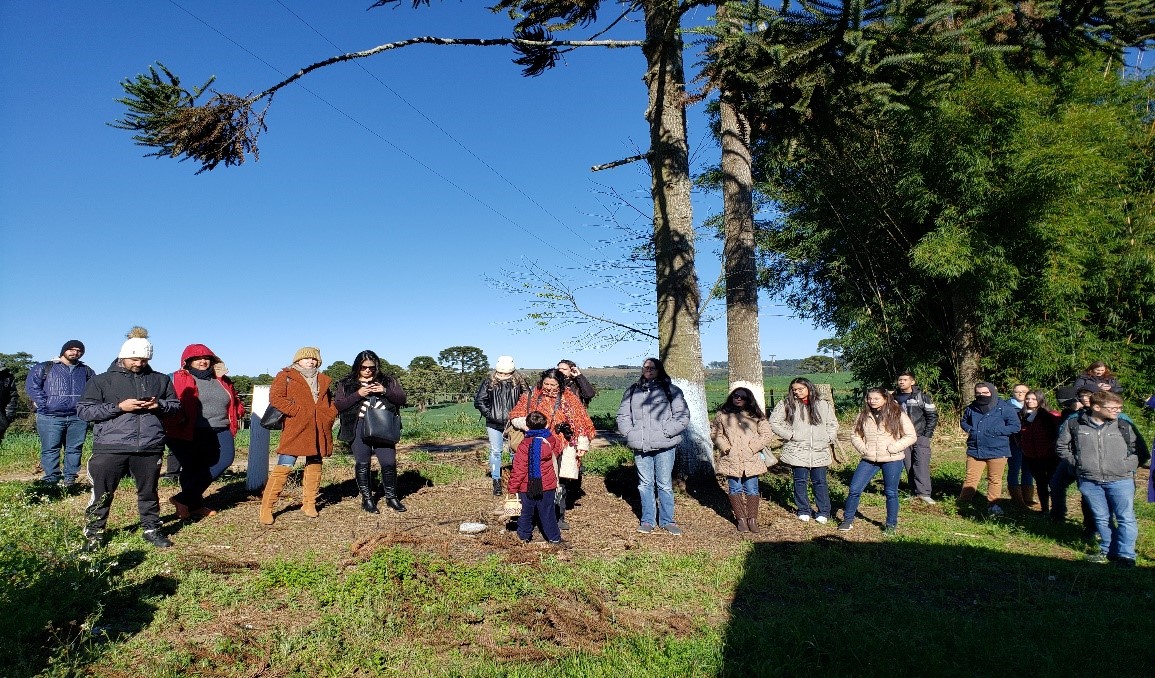
In 2015, the PPGAmb, represented by Professors Mario Sergio Michaliszyn and Cíntia Mara Ribas de Oliveira, met a demand from the Lapa Municipal Government to develop a project to be submitted to FUNASA (Ministry of Health) Public Notice nº 2/2015. The project titled “Education, Health Promotion, and Sustainability with the Population of the Vila Esperança Quilombola Remnant Area, Lapa – PR” was approved, and the group of PPGAmb faculty and students involved in the proposal participated until 2018 in advising municipal agencies to develop actions with the community. Unfortunately, despite the arrival of funds for its execution, bureaucratic difficulties in releasing the funds led the City Hall to cancel the project with FUNASA. Nevertheless, PPGAmb continued its actions in the community, strengthening its social integration and commitment. Born in this same context, in 2017, the Traditional Populations Study Group: anthropology, Sociology and Environment strengthened ties with the Residents’ Associations and Leaders of the Quilombola Remnant Communities of Feixo, Restinga, and Vila Esperança, located in the Municipality of Lapa – PR. In 2020, an extension project was presented by Professor Cíntia Mara Ribas de Oliveira, with the involvement of students from the Program and different undergraduate courses for participatory monitoring of environmental quality in the Feixo Quilombola Remnant Community (Lapa), whose objective involves conducting experiences and environmental awareness for this population group.
Expanding its activities, in 2016, the Study Group also initiated actions with artisanal fishing communities in the Guaratuba State Environmental Protection Area (APA de Guaratuba) and the Superagui National Park, located in the Guaraqueçaba APA – PR, involving research projects, master’s dissertations, and doctoral theses. From 2020 onwards, the group’s research expanded to involve the Residents’ Associations of Vila Salto do Parati and Cabaraquara, located in Saint Hilaire-Lange National Park, with the realization of teaching, research, and extension projects, with the participation of the Guaratuba Mariculturists Association, the Technical Assistance and Rural Extension Company (Emater Guaratuba), the ONG Instituto Guaju, and the ONG SOS Vira-latas.
Through Professor Gisela Geraldine Castilho-Westphal from PPGAMB, starting in 2021, the group’s research expanded to involve the Residents’ Associations of Vila Salto do Parati and Cabaraquara, located in the Saint Hilaire-Lange National Park, in the area surrounding Guaratuba Bay-PR.
In addition to the partnership with residents’ associations over two years of executing teaching, research, and extension projects, partnerships were established with the Guaratuba Mariculturists Association (Aguamar), the Technical Assistance and Rural Extension Company (Emater Guaratuba), the ONG Instituto Guaju, the ONG SOS Vira-latas, and fishing colonies.
Partnerships were also established with various teaching and research institutions for the execution of projects such as monitoring the occurrence of two virus species in crabs caught on the Brazilian coast. These include the Federal Institute of Alagoas (IFAL), the Federal University of Paraná (UFPR), the Federal Institute of Paraná (IFPR), and LACTEC.
Professor Gisela is also a faculty member at the Nahyr Kalckmann de Arruda Professional Education Center (CEPNKA) of the Foundation for Cleaning and Conservation Specialized Services and Facilities (FACOP), facilitating a partnership in studies involving integrated waste management and the training of cleaning and conservation professionals in sustainable practices.
Since 2020, the execution of environmental education extension projects has involved the following partner schools: Rudi Heinrichs Municipal Rural School in Piraquara-PR; Prainha School, in Guaratuba-PR; Maria Amélia Early Childhood Education Center (Maria Amélia Association – AMA), in Curitiba-PR; Newton Freire Maia Professional Education Center (CEEP), in Pinhais-PR, and Nahyr Kalckmann de Arruda Professional Education Center (CEPNKA), in Almirante Tamandaré-PR. With the execution of the following projects: “Less plastic – plastic waste disposal and the risks of microplastics in the environment,” “Extension in sanitary hygiene: unique health in early childhood education”; “Extension in sanitary hygiene: importance of water for health and the environment”; “Extension in sanitary hygiene: sanitary management in animal production on a farm school located in the Iraí Environmental Protection Area (APA Iraí).”
A partnership was also established with the Integrated Aquaculture and Environmental Studies Group (GIA) of UFPR. The partnership with GIA includes the joint execution of Research & Development, extension, and innovation projects, as well as the utilization of all its infrastructure, which includes equipment, a fish bioterium, and laboratories for animal experimentation, such as: Marine Aquaculture and Repopulation Center (CAMAR), Histology and Microbiology Laboratory (LHM), Aquatic Organisms Research Laboratory (LAPOA), and ATGC Genetics Laboratory.
Further strengthening its regional reach, in 2020, the PPGAmb made initial contact with the Paraná State Military Police with the aim of implementing joint actions and developing research to evaluate the “Força Verde Mirim” and “Ambientando” projects, which culminated in the elaboration of a postdoctoral internship project to be developed in 2021 by one of the members of that institution.
This historical overview thus demonstrates that the PPGAmb’s initiatives have been long-lasting, stimulating research that contributes to master’s dissertations and doctoral theses defended within the Program.
Social Integration
1. Quilombola Remnant Communities of Lapa – PR
It is well-known that traditional communities have a harmonious relationship with the environment, understanding that their subsistence depends on environmental conservation. However, the vulnerability they face due to a lack of healthcare actions, environmental sanitation, and access to public policies has biological repercussions, leading to areas of insecurity in health and food security (PARANÁ, 2009).
Examples of these communities include the Quilombola Remnant Communities of Feixo, Restinga, and Vila Esperança de Mariental, all located in the municipality of Lapa – PR.
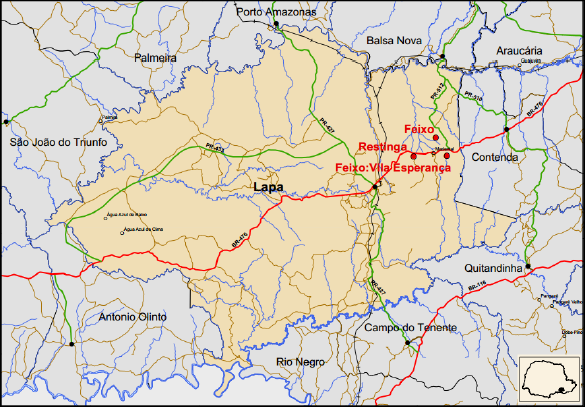
- FIGURE 1 – Location of the Vila Esperança Community in the Municipality of Lapa – PR
- SOURCE: adapted from the Institute of Lands, Cartography and Geosciences – ITCG.
The communities lack urban planning, and their homes are covered with tiles, but the conditions of some dwellings are precarious. Although they have treated water supply, many do not have access to a sanitary sewage collection and treatment system, nor any other action in the context of environmental sanitation, resulting in environmental contamination and the spread of diseases.
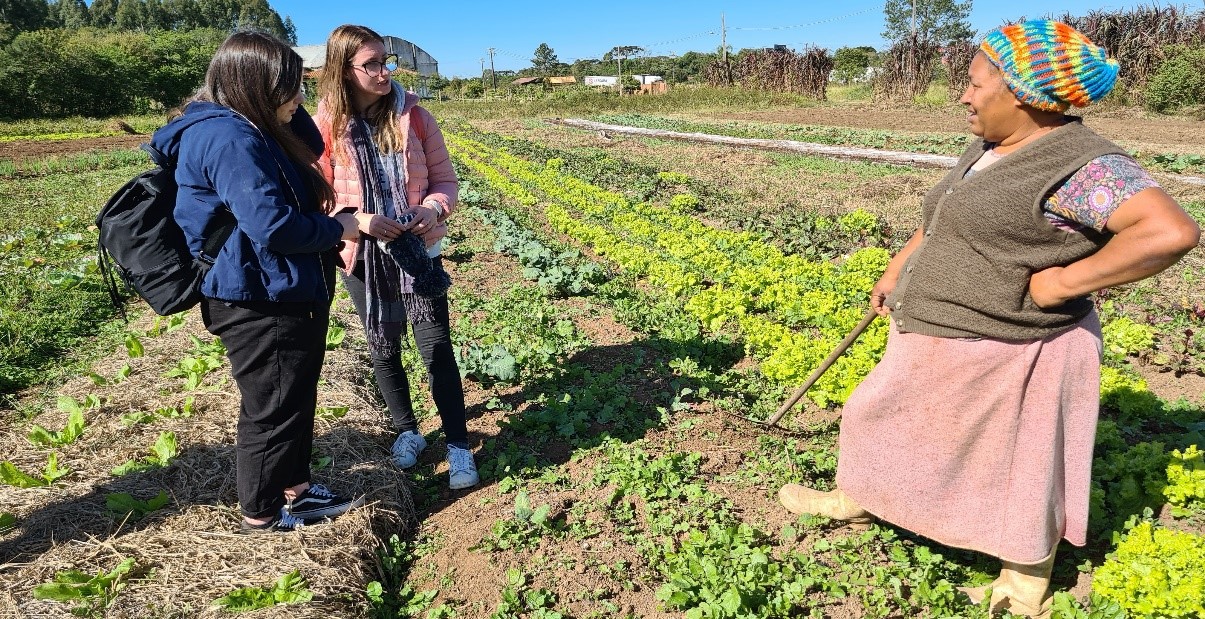
Residents of the Feixo and Restinga communities cultivate organic vegetables and legumes. Their produce is distributed through the Grupo Quero-Quero, which brings together local producers to meet demands from agreements, notably the National School Feeding Program (PNAE). Since 2022, they’ve also started selling their products at an organic fair held on Wednesdays at Universidade Positivo. Meanwhile, residents of Vila Esperança grow some food for their own subsistence, and their main source of income comes from federal government subsidies and seasonal farm labor.
In this context, actions aimed at health promotion and environmental education can represent a promising opportunity for intervention. By combining efforts, these actions seek to ensure society’s autonomy and stimulate popular empowerment. Such initiatives must be guided by a careful understanding of the community’s reality, as it’s fundamental to recognize and respect popular knowledge and aspirations for transformation to occur.
Within this framework, a participatory management system should contribute to improving the quality of life. This requires a decision-support approach through dynamic links between social and environmental systems (KRYSTYNA, 2010).
According to Jorgensen et al. (2006), a management model capable of fostering stakeholder interaction and continuous process improvement should aim for a shared understanding of internal and external challenges, provide a learning environment, and cultivate a culture of responsibility.
The European Community report on sustainability highlights that the main elements of an integrated environmental management system are: initial situation analysis, goal setting, political commitment, action plan execution, reporting, and evaluation (GESTÃO, 2009).
Thus, this project aims to promote, through participatory management and actions focused on valuing culture, community organization, health promotion, and environmental education, ways to apply sustainable, low-cost, and efficient solutions. These solutions seek to improve the community’s quality of life, respecting their culture and knowledge, and contributing to environmental preservation. Such actions strengthen leadership, critical awareness, and the empowerment of the population.
The collaborative efforts between PPGAmb and these communities began in 2014. Since then, research and interventions have led to Master’s Dissertations, Doctoral Theses, and institutional extension projects, involving students from various courses.
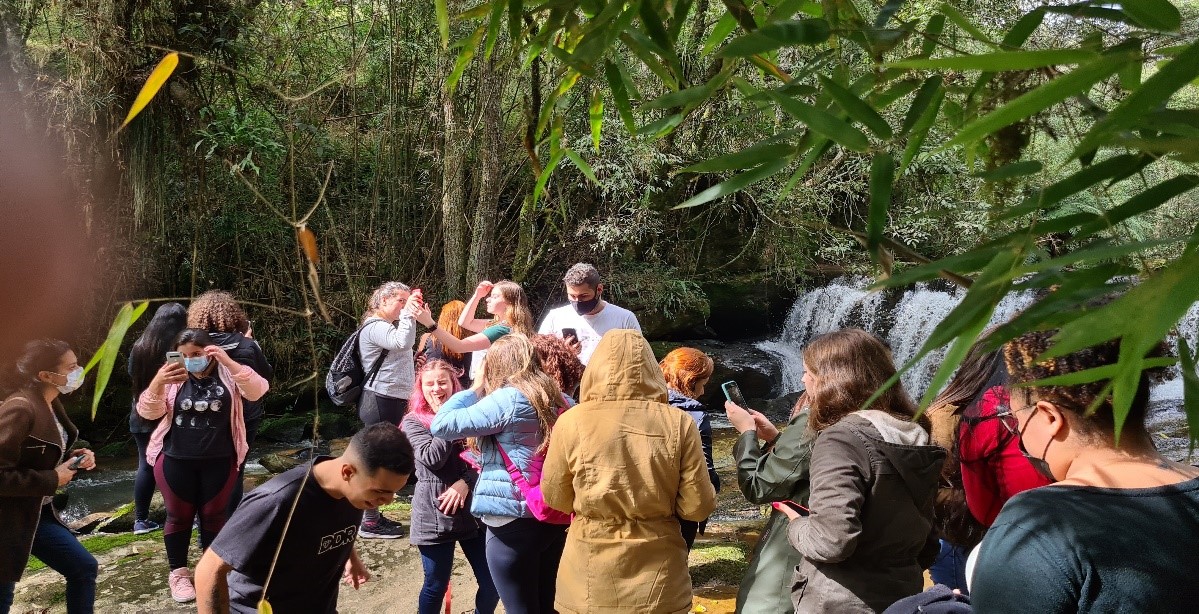
2. Traditional Riverine Communities in the Guaratuba Bay Area
Located in the southern part of the Paraná coast, Guaratuba Bay is part of an ecosystem with many preserved rivers and mangroves. This region is home to the Guaratuba State Environmental Protection Area (APA de Guaratuba) and also the Saint Hilaire-Lange National Park, an environmental preservation area that encompasses small coastal communities, ecotourism activities, restaurants, kiosks, marinas, marine farms (oyster farming), among others, in its surroundings.
The area around Guaratuba Bay, like the rest of the Paraná coast, is characterized by being a region of natural riches with a diverse and contrasting social reality. The main elements that make up this heterogeneity of the Paraná coast include a wide variety of ecosystems; a diversity of economic activities, with varying degrees of development; the cultural variety of populations with different origins and historical trajectories; and significant social inequalities. Furthermore, inhabitants of places like Vila Salto Parati, Cabaraquara, Riozinho, São Joãozinho, Descoberto, and Rio Cedro/Empanturrado, located within Guaratuba Bay, can be characterized as caiçaras, as they practice subsistence agriculture using simple manual tools such as sickles, hoes, and machetes.
Actions carried out in this location, in partnership between PPGAmb and the communities, began in 2021. Since then, various institutional extension projects have been developed, involving students from different undergraduate courses and focusing on the following areas:
- Environmental education and the construction of composting bins for residents of the Cabaraquara neighborhood.
- Rescuing caiçara culture in early childhood education, with all students from the Prainha School, Guaratuba-PR.
- Support actions for income generation for residents of the Cabaraquara neighborhood, Guaratuba-PR:
- Crafts using local natural materials and oyster farming waste.
- Promotion of community-based ecotourism, including bird watching and a partnership with Instituto Guaju.
- Training in good food handling practices, for integration into the oyster farming production chain, especially in local restaurants and kiosks.
- Zoonoses control through information dissemination and support for regional dog population control (castrations).
- Financial education for artisanal fishermen.
- Support for fish commercialization, forming an online network for promoting artisanal fishing products.
- Oyster farming waste management.
The execution of these projects has encouraged a closer relationship between academia and the community, fostering a great exchange of experiences and knowledge in the search for efficient solutions that preserve local knowledge and promote the sustainable use of natural resources.
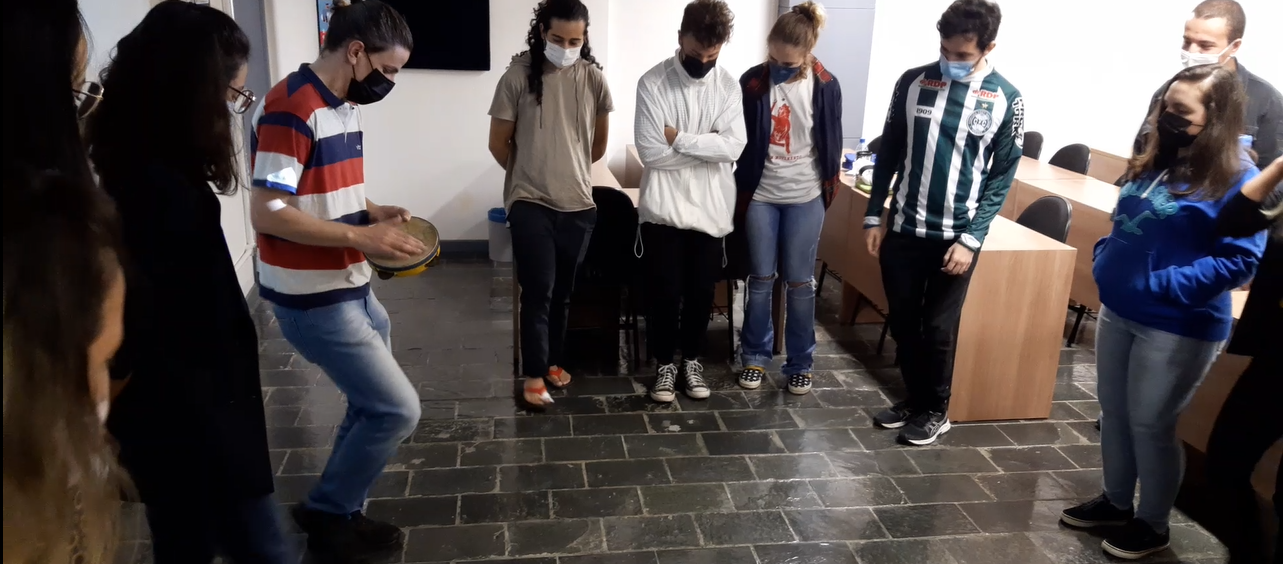
Figura 1. Fandango Circle. Caiçara culture workshop with students from Universidade Positivo and professor and musician José Nav
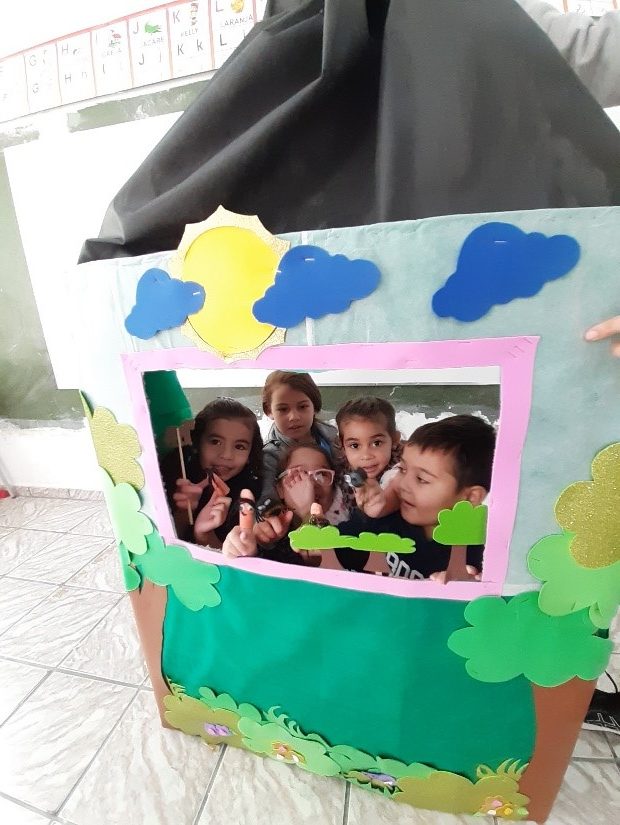
Figure 2. Caiçara Culture Revival Workshop with Children from Prainha Municipal School, Guaratuba-PR.
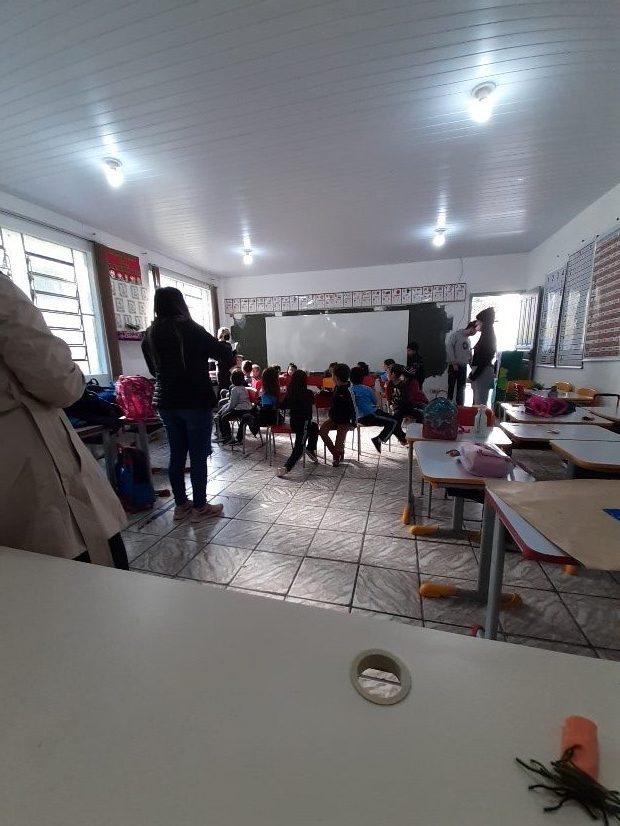
Figure 3. Caiçara Culture Revival Workshop with Children from Prainha Municipal School, Guaratuba-PR.
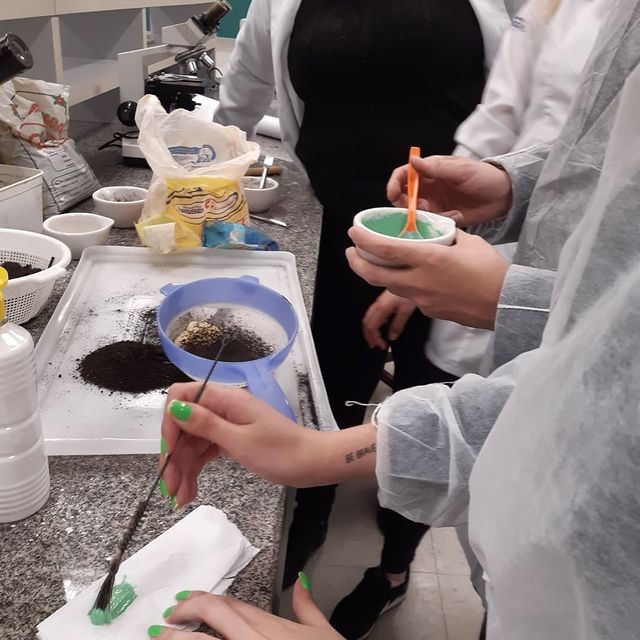
Figure 4. Laboratory tests conducted for the development of products from oyster shells in Guaratuba-PR.
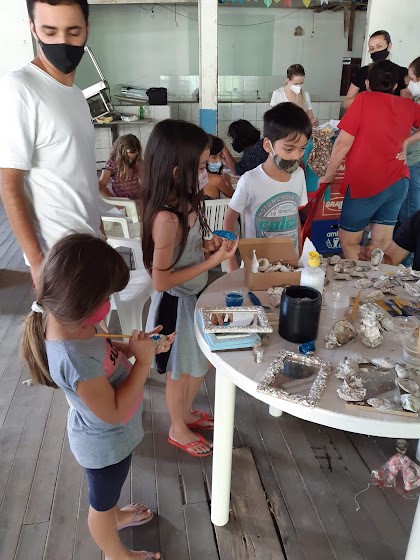
Figure 5: Oyster Shell Craft Workshop in the Cabaraquara Community, Guaratuba-PR.

Hei
Para acessar o Teste Vocacional e descobrir a carreira certa para você, preencha os campos abaixo.
É bem rapidinho!

Obrigado! Aguarde só um instante:
Estamos preparando seu teste e já vamos te encaminhar automaticamente em alguns segundos.
Hei,
Estamos muito felizes por seu interesse em conhecer um de nossos campi.
Para que possamos agendar a sua vista, preencha o formulário abaixo.
Obrigado pela sua mensagem!
Logo entraremos em contato.
Para saber sobre o início das inscrições, preencha abaixo: